Roger De Winter (1923-2001)
architect & furniture designer
A recognizable signature
Roger De Winter was a Belgian architect who made a remarkable contribution to postmodernism from the 50s to the 80s. His refined style found a thoughtful balance between functionality and understated design.
Education and early career
De Winter acquired the technical foundation of his expertise during his studies at the Saint-Luc Higher Institute of Architecture in Brussels.
He acquired his artistic skills subsequently during his training at La Cambre Academy where he received graphic training from Joris Minnen and worked alongside Victor Bourgeois in the workshop. He was particularly trained by the founder of the academy, Henry Van de Velde.
With fellow students like Constantin Brodzki and Willy Van Der Meeren, he subsequently shaped - in his modest but original way - post-war modernism in Belgium.
%20-%20Vilvoorde.jpg) signature floating staircase - house Spruyt -1956 - Vilvoorde
signature floating staircase - house Spruyt -1956 - VilvoordeArchitectural Vision and Practice
In his profession, De Winter was extremely serious and sincere: only what was achievable was considered for his designs. Everything else was regarded as non-architecture led by "false lovers" of the craft. What was retained was thoughtfully conceived and drawn in minute detail.
Once the living concept was fully examined with his client, a "total design" followed with little room for compromise. He took control of every aspect, sometimes even to the placement of furniture and decoration in already occupied homes.
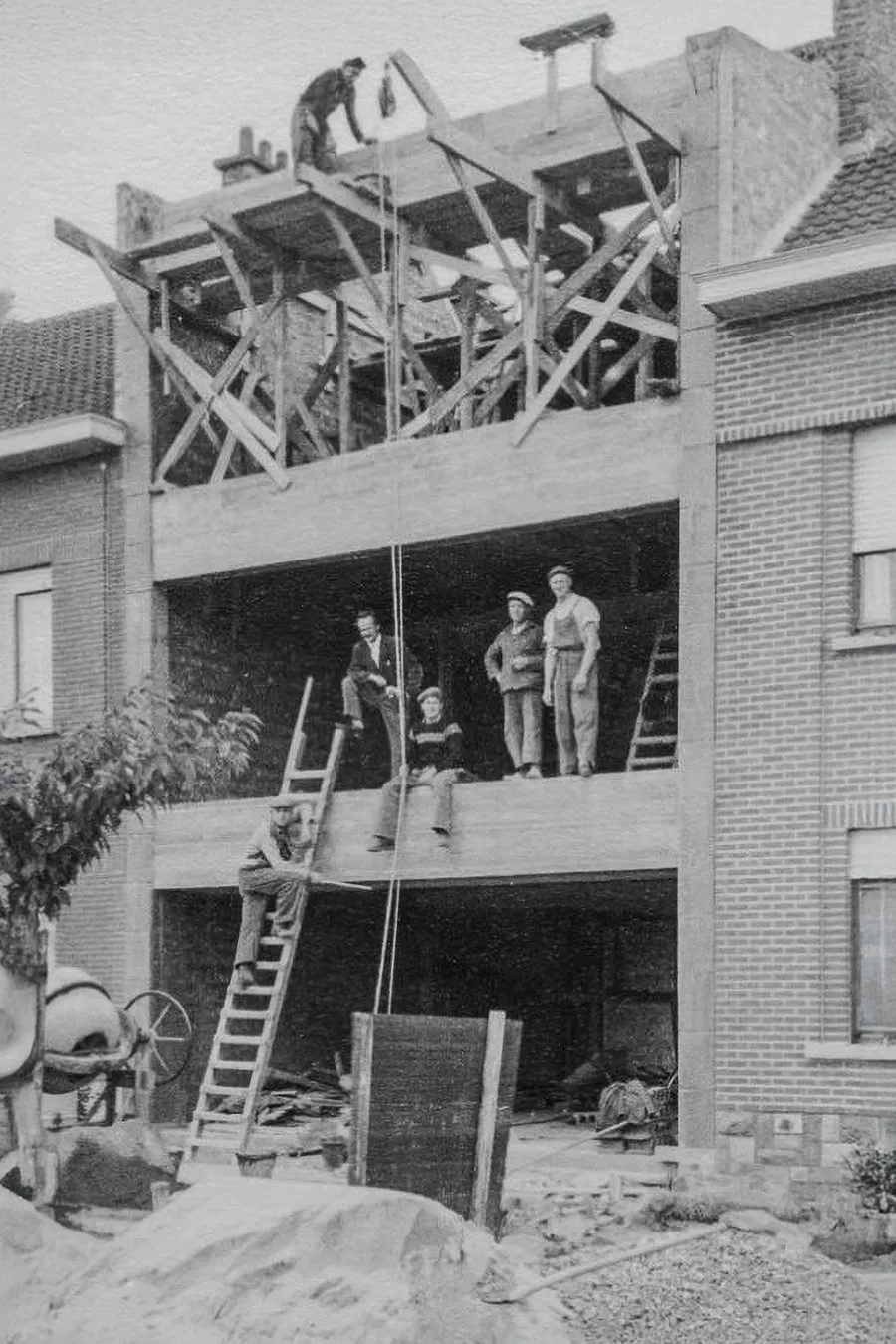 RDW with building team - house Jacobs - 1950's - Vilvoorde
Roger De Winter was known for his meticulous planning and feared for his fanatical site supervision. He could count on the respect of contractors and craftsmen thanks to his thorough knowledge of materials and techniques. His design drawings were extremely practical and applicable.
He had an aversion to political interference in the field and due to his singular approach, he was selective in choosing his assignments. He did not accept commissions in the public domain and focused exclusively on the private market.
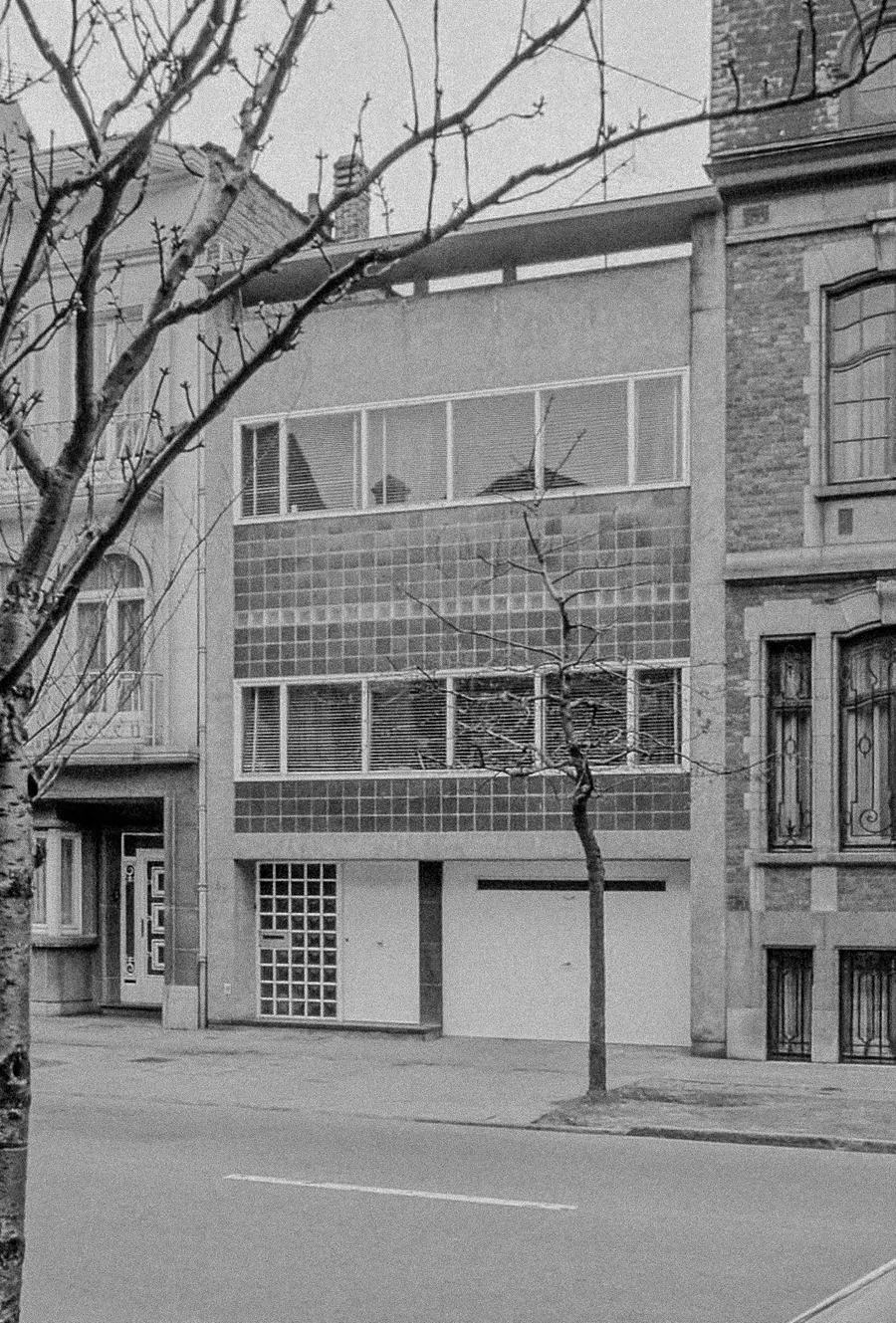 house Robberechts - 1956 - Vilvoorde
with Paul-Emile Vincent (1948-1950)
Freshly graduated from La Cambre, Paul-Emile Vincent and Roger De Winter immediately established a collaboration. Several remarkable houses in Vilvoorde can be considered the starting point for the development of "De Winter's style." During this period, the first few pieces of furniture found their way from the drawing board to the workshop.
with Lucien Engels (1950-1954)
In 1950, De Winter took under his wing Lucien Engels, then a graduate, and they started a joint practice in the garden pavilion of the De Winter family home. The builders inspired each other to create a series of characteristic terraced houses that still adorn the urban landscape of Vilvoorde today. After this short but passionate period, the two divergent characters followed their own paths. (Conaerts, Geert & Vanclooster, Lucas. Vilvoorde. Staalkaart van Moderne Architectuur. Peeters Uitgeverij, 2010)
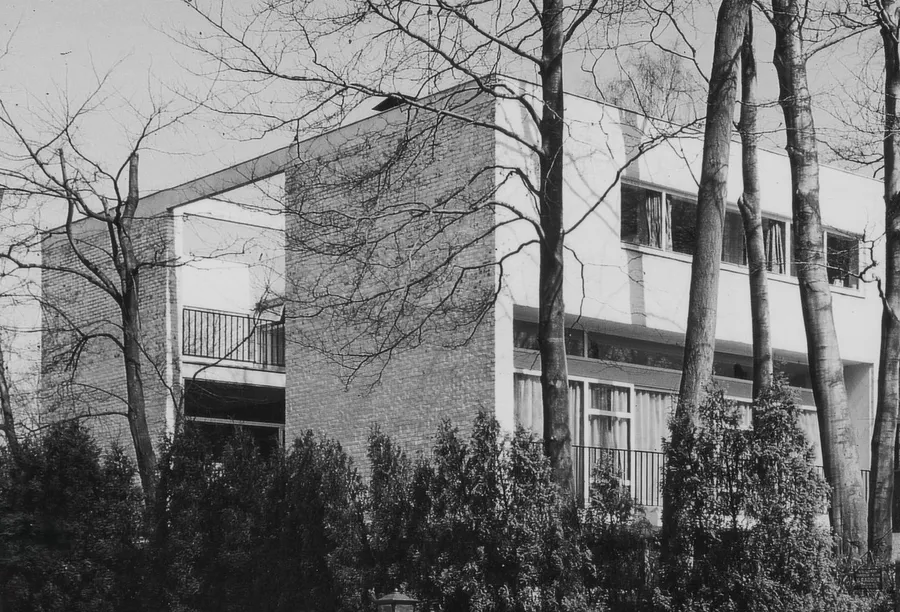 house Renard - 1968 - Brussels
After 1954, De Winter expanded his working territory to the surroundings of Vilvoorde. He submitted the winning design for the Ministry of Health pavilion at the 1958 World Exhibition Expo 58, in the already existing building known today as Palace 6 of the Heysel complex in Brussels. This constituted the only exception to the rule that Roger De Winter did not accept assignments in the public domain.
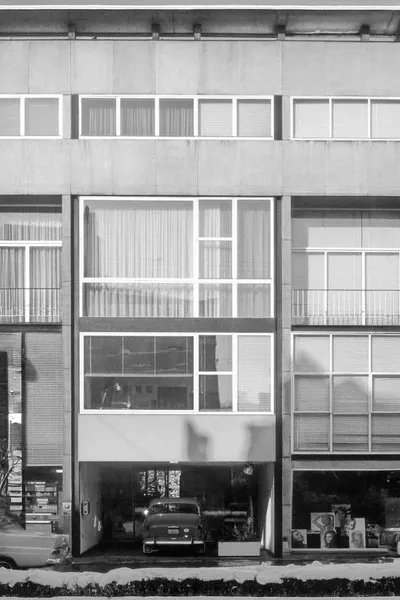 De Winter family house & office - 1958 - Vilvoorde
He successfully completed assignments with greater design freedom, which resulted in some remarkable and characteristic works.
His own multifunctional family home with integrated architectural office and carport was built in Vilvoorde in 1958, where over the years several talented collaborators worked.
A series of individual furniture pieces was designed. These were manufactured in limited edition and placed exclusively in specific designated housing projects. They reflect the same attention to quality that also characterizes his architectural work. The series was not marketed further, but the work is revived by De Winter Design , in homage to the architect.
Legacy
De Winter worked until the mid-90s and contributed to the development of Belgian architecture. His work still offers innovative perspectives for contemporary designers and architects.
De Winter Design reissues Roger De Winter's furniture creations, making his vision of design and functionality available for contemporary interiors.